ChemNetz


Sections
-
Community Gardens
-
Up to Date


Hi! It’s great you‘ve landed here and discovered us! Welcome to a completely new perspective on Chemnitz – are you curious?
ChemNetz - An Alternative Invitation to Discover Our City!
When visiting a new city, do you ever wonder where the alternative cultural scene is? Then this map is for you. For us, one of the city‘s greatest attractions is its (sub)cultural life. We want to highlight the diverse places and people that shape culture in Chemnitz, some of which are a little hidden in the 39 districts. This map presents, among so much more, places of culture and participation, community gardens, as well as spaces to give and to take. With this map, you can experience the city outside of its well-known attractions! Why ChemNetz? We call our map ChemNetz since it‘s a “Netz“ (German for “Net or Grid“) connecting cool spots in Chemnitz with each other and with people from everywhere.
Where Are We?
With around 250,000 inhabitants, Chemnitz is the third-largest city in Saxony and one of the cities with the oldest population in Europe. During the GDR era (German Democratic Republic)*, Chemnitz was called “Karl-Marx- Stadt”, and you can still find the second- largest bronze bust in the world – the head of Karl Marx – in the city centre. Always worth a photo! Alongside the socialist traces, you‘ll also find many lost places in Chemnitz – old factory sites, now half overgrown, that only hint with a bit of imagination at what they once were. Find more information on this under “Five Minutes of History“.
What Is Going On?
Chemnitz has often been overshadowed by Leipzig and Dresden. The phrase ‚Nothing’s going on in Chemnitz?‘ is heard quite often. We say: That’s a prejudice and this map proves it! For us, what sets the city apart today is its (sub) culture. Throughout the city you‘ll find a network of small, large, professional, and self-organized places. Here, people work together to create a vibrant city. Getting creative, starting projects together, helping other groups out – that‘s the Chemnitz spirit.
What Awaits You on the Map?
We invite you to get to know Chemnitz and its alleys. On our map, we show you wasteland sites that have become community gardens, cultural centers, factory areas and backyards. Find out how you can immerse yourself in Chemnitz’s culture – whether it‘s in an urban gardening project, a self-help workshop, a political group, or a community center.
Accessibility
All locations on our map are marked according to their structural accessibility. We also recommend the website wheelmap.org. There you will find an overview and ratings of wheelchair accessible places. You can also leave your personal rating here.
What Else?
2025 is a big year for Chemnitz. The cultural venues, the city, and its residents have been preparing for the year as European Capital of Culture for a long time. Now the time has finally come, and there is plenty to discover.
You can find out how best to get around Chemnitz by bus and train, where to find the latest information on events and gossip, or what the “Nischl” is all about in our info boxes. They will prepare you to walk through our city like a local. Have fun discovering!
Stay up-to-date and follow us on Instagram, TikTok, Facebook or visit our website.
*Everyone talks about East and West Germany, they were separated until 1990. GDR was the East German political area.

Get Active in the District
Cultural and social life in Chemnitz is not concentrated in one spot, it takes place all over the 39 city districts. Not only are there a wide range of events to discover, but also institutions that act as supporters of the city‘s DIY-culture. They provide information about current events as well as advice and support for projects. This is where locals go to connect with their neighbours. If you want to get to know the neighbourhood better, visit the community centres! There you can get flyers, stickers, and all the information you‘ll need (also in English). It’s a great way to find lesser known spots and events. The community centres give you a great overview of the district’s culture, beyond the classic tourist info.
Community Centre (Bürgerzentrum) at Leipziger Straße
Leipziger Str. 39 | Tue & Thur: 8 am - 5 pm, Wed & Fri: 8 - 12 am
www.buelei39.de | info@buelei39.de
Community Centre (Bürgerzentrum) at Reitbahnviertel
Reitbahnstr. 32 | Tue & Thur: 1 - 5 pm
www.reitbahnviertel.de | stm-innenstadt@awo-chemnitz
Community Centre (Bürgerzentrum) at Sonnenberg
Sonnenstr. 35 | Mo - Thur: 10 am - 4 pm, Fri: 1 - 6 pm
www.sonnenberg-chemnitz.de | info@sonnenberg-chemnitz.de


Repair Locations
What is broken does not have to be immediately disposed of. Find support, know-how, and tools to repair broken things in these places. There are quite a number of places in the city that help you to live a more sustainable and resource-saving life. Whether you have a flat tire on your bike, a cracked smartphone display, or your computer won‘t boot up – you will find support here.
ADFC (Bicycle Self-Service Station)
You too can repair your bike yourself! The ADFC shows you how. A simple flat is easy, of course, and if you want to repair something more unusual, you can bring your own spare parts. The association is happy to receive donations for tools and materials.
Henriettenstr. 5 | variable and Wed: even weeks 6 - 8:30 pm, odd weeks 5 - 8 pm | www.chemnitz.adfc-sachsen.de/selbsthilfewerkstatt | gs@adfc-chemnitz.de
Repair Café
Giving broken things a second life is the motto here. At the repair café, teams can work together to repair pretty much anything, from bicycles to computers. The café also collects solutions to common problems and by that contributes to the sustainable exchange of knowledge.
Paul-Arnold-Str. 5 | Thur: 3 - 6 pm | www.stadthalten-chemnitz.de/reparatur-cafe | reparaturcafe@stadthalten-chemnitz.de
Computertruhe
Here, decommissioned technology is made usable again, free of charge, for those in need. The donated computers are stripped of all personal data and then distributed fairly. The association makes digital services accessible and sustainably utilizes existing hardware.
Paul-Arnold-Str. 5 | Thur: 3 - 6 pm | www.computertruhe.de / karola.koepferl@computertruhe.de
Dr. Radinger (Bicycle Self-Service Station)
Bike trouble? Here you find space, tools and instructions for self-help. The self-help workshop offers you the opportunity to repair your bike on your own. The team is happy to receive donations of materials and support from bike enthusiasts.
Bernsdorfer Str. 41 | Tue: 4 - 7 pm | www.stura.tu-chemnitz.de/referat/fshw | Facebook: FahrradselbsthilfewerkstattRadinger
Bicycle Service Stations:
Konkordiastr. 3
Brühl 65
Carl-von-Ossietzky-Str. 170
Thüringer Weg 3
Wilhelm-Firl-Str. 11

Community Gardens
Want to see a Chemnitzer‘s eyes light up while talking about their favorite hobby? – Open up a conversation about their garden. Gardening is a very popular hobby among Chemnitzers and in East Germany generally. Allotment gardens (here we call them Kleingarten) were important spaces for individuals and families to grow their own food during the GDR times. They served as places for socializing and maintaining a connection to nature in cities, as well as offering a sense of autonomy and personal freedom. Chemnitz has a whopping 17.000 so called Kleingärten. It’s a tremendously important part of our culture. Have you ever experienced one of those spaces? Usually it’s allowed to walk through them and check out the gardens. You will be welcomed by odd garden gnomes, gorgeous flowers and much more! Just abide by these two rules: 1. you must greet everyone you see; 2. don‘t leave the paths! A simple “Hallo“ or “Guten Tag“ is enough, but keep in mind you’re crossing through people’s hideaways. In addition to the allotment gardens there are numerous urban gardening projects. These often old wastelands, backyards, or unused meadows promote biodiversity and ecology. We recommend these places to everyone interested in ecology and climate justice.
Intercultural Garden Bunte Erde
The Bunte Erde association uses urban gardening based on sustainable and ecological principles to connect people of different cultures. In courses for children and adults, they show how to create healthy self-sufficiency while conserving resources.
Franz-Mehring-Str. 39 | info@bunteerde.de
Community Garden at the Pleißenbach
Grow vegetables, sow a meadow full of flowers, or just relax. The community garden is still under construction and is to be transformed into a recreational and educational space by and for the neighborhood.
Corner of Matthesstr. and Leipziger Str. | grundstueck2@urbanepolemik.de
District Garden Kompost
Gardening in a community of solidarity and creating a green oasis in the noisy city. Together they design, sow, harvest, and live a little ecological utopia.
Corner of Matthesstr. and Leipziger Str. | garten@urbanepolemik.de
Gartenutopie
This democratically orga- nised neighbourhood garden connects ecology and citizen participation, creating ecological and social value in Sonnenberg.
Peterstr. 33 | info@gartenutopie.de
Ideengarten 72
The spacious community garden in Sonnenberg offers regular activities for children that promote environmental education. It is an open space for the neighborhood.
Reinhardtstr. 24 | 2nd Sat of the month: 2 - 6 pm | maren.troschke@gmx.de

Queer Community
The queer network Chemnitz regularly provides up-to-date information on Instagram (@queeres.netzwerk.chemnitz). The best queer events in Chemnitz and the surrounding areas are posted here. Find other LGBTQIA+ people and hang out together at parties, debates or the legendary „Queerbar“ evenings at SUBBOTNIK or LOKOMOV .
Multicultural Spaces
In Chemnitz, there are many intercultural organisations and places to meet people and get to know the cultural diversity of our city. The House of Cultures or IZDA e.V. are great starting points for anyone who appreciates intercultural exchange. Above all, they offer a variety of activities such as cooking events, concerts, readings, and more. In case you stay a little longer in Chemnitz and would like to make friends, you can get in touch via Instagram with “Start With A Friend” (@swaf_chemnitz).

Swap & Share
Swapping unused things is one of many ways to live more sustainably. There are many places in Chemnitz where you can swap unused books, records, or whatever else you have lying around. Swap cabinets are the place to hand in unused items and get new things for free. They are all over the city. For food that is still edible there are several “Fair-Teiler‘s” run by the Foodsharing initiative. Here you can hand in food or save it from the garbage can. Küfa (Küche für Alle or Kitchen for Everyone) is donation-based vegan dinner and a social event for everyone. Every Tuesday at AJZ , Wednesday at SUBBTONIK , and Thursday at ZUKUNFT .
Bookcase Schönherrfabrik
Schönherrstr. 8
Fairteiler at the Domizil e.V.
Leipziger Str. 41
Bookcase on Brühl
Herrmannstr. 8
Tante Ula Free Store
Leipziger Str. 3 | Thur: 4 - 8 pm
Bookcase Kaßberg
Weststr. 49
Bookcase in Tietz
Moritzstr. 20
Fairteiler Dresdner Straße
Dresdner Str. 12
Fairteiler at Community Centre Sonnenberg
Sonnenstr. 35 | Tue: 4 - 7 pm
Bookbox at Radau e.V.
Rößlerstr. 12
Bernsdorf Exchange Cabinet
Bernsdorfer Str. 43
Fairteiler and Exchange Cabinet at AJZ Talschock
Chemnitztalstr. 54 | variable and Wed: even weeks 6 - 8:30 pm, odd weeks 5 - 8 pm
Fairteiler at the Knappteich
on the side of the allotment gardens
Bookcase at Kinder- und Jugendhaus Compact
Alfred-Neubert-Str. 9

Green Places
One of the things we love about our city is its proximity to nature – in parks, on the banks of the river, or in numerous community gardens. We recommend you the most beautiful green refuges in Chemnitz to escape the gray concrete of the city and relax. Come outside and touch some grass!
Rabenstein Forest
Dense forests with picturesque hiking trails offer an ideal place for nature lovers and those seeking peace and quiet. There are numerous paths to discover through the untouched nature.
Crimmitschau Forest
Some say that the water in this forest‘s spring is very powerful. Whether you really want to try it is up to you, but a walk in the forest is definitely not bad for your health.
Küchwald
Benedictine monks once gathered food here. Today, it is a park full of culture and relaxation. Drop by and enjoy the theater, cosmonaut center “Sigmund Jähn”, park railroad, or the beautiful botanical gardens.
Nordpark
Beach feeling with a pavilion by the river: the natural redesign of the area offers sun loungers and large stones to recline on. A place to relax right by the water!
Fuchsberg in Zeisigwald
Created from the spoil of old quarries, this hill now overlooks Zeisigwald. From here, you can see as far as the foothills of the Ore Mountains. Wonderful views over Chemnitz!
Jewish Cementery on Harthweg
This site bears witness to and preserves over 130 years of Jewish history in Chemnitz. To this day, the site is threatened by anti-Semitic attacks.
Kappelbach Cycle Path
A wonderfully developed path along a small river takes you through the city. Bring your bike or inline skates, or just walk–there are many green oases to discover.
Municipal Central Cemetery
The municipal cemeteries of Chemnitz are primarily places of mourning and reflection, but also places of encounter and life. A stroll always holds surprises, and sometimes idyllic gems reveal themselves.
Markersdorfer Oase
There used to be space for 85 residential units in these eleven story buildings. Today, “the Oasis“ offers space for events and relaxation. Remaining parts of the old buildings remind us of the past.
Pfarrhübel
Sunset romance just outside the city gates – it‘s always worth the short hike here to see the glowing chimney “Esse“ in the evening.

5 Minutes of History
So, You Want to Learn More About Chemnitz’s History?
Three Chemnitz legends, who each shaped this city in their own way, will tell you their part of the story: Minna Simon, the first strike leader of the workers‘ movement; Marianne Brandt, the famous Bauhaus designer; and Jutta Müller, the legendary figure skating coach. They take a walk through the city they know so well.
”Ah, Chemnitz,” Minna begins with a proud smile, ”this is where we went on strike in 1871 for better working conditions and fair wages. Factories as far as the eye could see and chimneys that darkened the sky. But we were tough and got our way!” She grins proudly as she points to the old factory buildings. “Did you know that Chemnitz was called the ‚Manchester of Saxony‘? We drove industrialization like no other city in Saxony.”
”Oh, I can well imagine,” replies Marianne Brandt, with a passion for architecture. “Chemnitz was already a center for textiles and mechanical engineering in the 19th century. This combination of functionality and aesthetics would have inspired the Bauhaus! And me? Well, my work with clear lines and elegant design is also rooted here. This city has always focused on pragmatism and beauty.” They stop by the Red Tower, which proudly watches over the city, undaunted by the centuries. “This tower has seen it all – from the early days of trade to the destruction of the Second World War and the reconstruction afterwards.”
”Speaking of reconstruction,” Jutta Müller interjects with a laugh. “Only one thing comes to mind: Karl-Marx-Stadt. Chemnitz was renamed in 1953 and I trained my athletes on the ice here. Hard work, discipline and a bit of glamour – that‘s what Chemnitz embodies for me. No matter how many times you fall, you get back up and keep going.” She winks and points. “And who could miss the giant Karl Marx head, the ‚Nischel‘? It‘s been the city‘s landmark since 1971 and looks down on us critically - or is that more of an encouraging look?”
“It certainly encourages us to keep going,” says Minna with a grin. “And now? Chemnitz is not only the home of machinery and large-scale industry, but also the European Capital of Culture 2025. Who would have thought? From textile machines to art and culture – this city has reinvented itself time and time again.”
”That‘s what makes Chemnitz special,” agrees Marianne. “Even the thermos flask was developed here! Adolf Ferdinand Weinhold laid the foundation for the thermos flask with his invention. And then there‘s Fit, the dishwashing liquid from the region – the curved bottle shape is iconic.”
The three women walk on, along the streets of Chemnitz. The city is not just an industrial metropolis, but full of change, creative minds and perseverance – and this is reflected in every corner.
Besides industrialization, the history of Chemnitz is also one of unresolved conflicts and far-right continuity. Following a violent alliance between neo-Nazis, hooligans, and implicitly right-wing urban society, Chemnitz hit the global news in 2018. Caused by a deadly attack at the city festival, Chemnitz became the target of far-right mobilization. There is a long history of right-wing violence here, be it the so-called “baseball bat years” of the 90s, the NSU complex in the 2000s, or the continuity of right-wing mobilization to this day. Groups that stand up for a cosmopolitan city for everybody and a network of solidarity are countering this. Chemnitz has many places and activists who are taking a stand against the right. They can use all the help they can get. The NSU (National Socialist Underground) was a far-right terrorist network in Germany responsible for a series of racially motivated murders. The group, whose so called “core trio“ originated from Thuringia, also carried out numerous robberies in eastern and western Germany as well as bomb attacks, causing significant injuries and damage. Chemnitz was the residence of the so called “trio“ from 2000 to 2001, and one of their places of operation. To this day, the crimes have not been fully investigated or resolved. More information can be found in the Documentation Centre on the NSU Complex . In remembrance of: Enver Şimşek, Abdurrahim Özüdoğru, Süleyman Taşköprü, Habil Kılıç, Mehmet Turgut, İsmail Yaşar, Theodoros Boulgarides, Mehmet Kubaşık, Halit Yozgat and Michèle Kiesewetter.

Good to Know
1. Bus, Train, Bike, Walk
Many roads lead to Rome, but every line stops at Zentralhaltestelle. Apart from the 82, every streetcar and every bus in Chemnitz stops at “Zenti” at some point. In the evenings, all lines wait for each other and you can change between lines, also known as a “rendezvous“. The C lines take you to the Chemnitz cultural region, which is always worth a day trip. Going on foot is often a good option too - the city is very walkable. Especially in the evening and at night it‘s also great to have a bike so you don‘t have to rely on the night bus.
2. Chemnitz at Night
You often hear that the curbs are raised in the evening. Unfortunately, it is true that many stores are not open until late and finding a midnight snack is borderline impossible. Snacks and drinks for emergencies are therefore key.
3. Toilets
Many public toilets are listed on our digital map. You can use the “Nette Toilette” app to find restaurants that make their toilets available.
4. Water
Of course the tap water in Chemnitz is drinkable! There are three drinking water fountains in the city, which we have marked on the map. To cool off in the summer, there are lakes just outside the city and in the Ore Mountains.
5. Cash
An essential companion in everyday life in Chemnitz – card payment is not yet available in many places.

Up to date
These channels keep you up to date in Chemnitz: Cultural events, music, current topics, gossip and more!
Events:
371 Stadtmagazin (www.371stadtmagazin.de) Here you will find all events in a practical planner and (even) local magazine articles.
Neighbourhood Magazines (also online): KaSch,
Sonnenberger, Südblick, ReitbahnBote, BISS
The Best Chemnitz Satire & Truths:
Party, rabble-rousing, and poetry (www.remarx.eu), @partypoppoesie
The Frequencies that Must Flow through Your Radio:
Radio T: the non-commercial local radio station for Chemnitz and the surrounding area www.radiot-chemnitz.de
Radio UniCC: the campus radio station at Chemnitz University of Technology! www.radio-unicc.de
Instagram Channels that Give You a Good Insight:
@hand.in.hand.ev, @chemnitz_nazifrei, @agr.chemnitz (Aufstehen gegen Rassismus), @stadtchemnitz, @rabbaz, @tasteofchemnitz, and of course the profiles of the respective locations.

Talk Like a Local
Nor = Yes
's is fei schie = It's really beautiful / great
Ich mach los = I’m going to head home
Euja = Someone tells you you haven’t done
something and you want to emphasize that you
actually did. Ex: You didn’t clean the dishes! Euja!
(Yes I did!)
Glück auf! = Greeting (mining tradition)
Lulatsch = Colorful chimney in Chemnitz
Eiforbibbsch = Well well well, what do we have here?
Zenti = Central bus and streetcar station in Chemnitz


Eat Like a Local
Here you find some ideas for food specialties from Chemnitz:
Tofu from Tofubar
Weekly Market in the City Center: Here you can find fruit and vegetables, fish, langos (a must!) and many other delicacies every Tuesday to Sunday. The pleasure of ice cream!
Whether it‘s Marschners Eiscafé, Valentino or ice cream in the Zeisigwaldschänke - you‘ll find the best ice cream in town here.
You can find exceptional spices at “Direkt vom Feld”. The taste of fresh organic spices on your plate is something very special.
Feeling thirsty or just want to enjoy a nice bever- age?
You should try these Chemnitz drinks: Coffee from Bohnenmeister Coffee Roastery
Lemonades: Kulturmische, Karls Kola, Karls Brause
Beers: Kulturbier, Bergt Bräu Helles, Einsiedeler Bier, Marxstädter Eggnog: Eierlikörz, Liebeleii
Eggnog: Eierlikörz, Liebeleii


The Fritz Heckert Area - The City Within the City
Fifty years ago, this was the second-largest inner-city Plattenbaugebiet (prefabricated concrete slab tower block housing area) in the former GDR*. Between 1970 and 1990, it was home to 38% of the children born in Chemnitz. Since reunification, the five districts (Kappel, Hutholz, Markersdorf, Morgenleite, Helbersdorf) have been characterized by renaturation and depopulation.
The number of inhabitants plummeted from 92,000 to just 37,000. In addition to the socialist architecture and building art, there is now street art to be seen, such as the mural “In unserer Mitte” in memory of the victims of the NSU* (located at Friedrich-Viertel-Str. 2).
Visit this area by taking tram no. 4 to the station “Hutholz.“ From here, you can take a walk to the mural “In unserer Mitte” (more information available under 5 Minutes of History).
From there, it is a 25-minute walk to the MARKERSDORFER OASE , a park that exemplifies the transformation from a residential area to a recreational space. At this location, you can also find a café or grab something to eat. You can return to the city center by taking bus no. 52.
*GDR = East Germany
*NSU = National Socialist Underground, a racist terror group
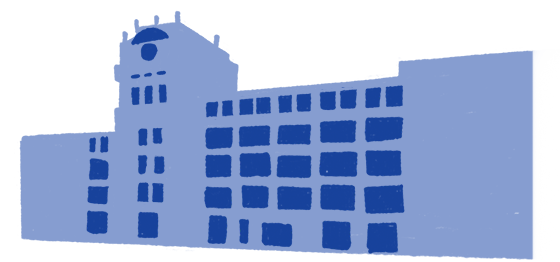
The Legacy of Industrialization
”People work in Chemnitz, trade in Leipzig, and squander their money in Dresden”, as the old saying goes. Chemnitz is very proud of its industrial heritage. Thanks to the bleaching privilege and its favorable location, the city quickly became a hotspot for the textile industry, as well as mechanical engineering.
Between 1800 and 1883, the population increased almost tenfold to 103,000 inhabitants. Today, many former industrial buildings are cultural venues. For a short tour to experience the vibe of industrial architecture combined with cultural events, you can visit Wirkbau, home to ATOMINO. With a coffee to go from Bohnenmeister, you can walk to Stadtpark.
Along Altchemnitzer Straße, you’ll come across numerous factories, abandoned places, and cultural venues. From Stadtpark, take a moment to admire the Viadukt, an old railway bridge. If you’d like to explore further, head to Schönherrfabrik, where you’ll find DRUCKBUDE a spot for skateboarding. There, you’ll also find a bookcase and a café.

Chemnitz Valley Cycle Path
The river Chemnitz got its original name „Kamenitza“ from stones protruding from the river. In the 14th century, the river became very important for the textile industry when bleaching plants were established here.
Today, the Chemnitz river is primarily used for recreation. The cycle path leads around 30 km along the river, which still bears the traces of industrialization, through the city.
If you follow the current, you will pass through the lush city park, across the city center and along the power station with its gigantic “Lulatsch” chimney, eventually reaching nature.
The river sometimes looks like a mountain stream here, with large boulders and steep banks. The flora and fauna along the way alone are worth a visit, whether by bike or on inline skates. Want to discover the river interactively?
www.actionbound.com/bound/stadt-am-fluss

Where to Go Next?
The Chemnitz model, i.e. streetcars that commute between Chemnitz and the surrounding area, makes the cultural region accessible. In the Ore Mountains, there are great hikes and the mining tradition (a UNESCO World Heritage Site) to experience. The region also offers reservoirs and bathing lakes.
C11: Stollberg
C13: Burgstädt or Aue
C14: Mittweida or Thalheim
C15: Hainichen
If you want to extend your city trip, why not check this out:
A. Dresden or Leipzig : 1h per train
B. Ústí nad Labem, Erfurt (USE-IT city), Weimar, Jena or Halle: 2-3h per train
C. Prague (USE-IT city): 3-4h per train or bus

Credits
WWW.USE-IT.TRAVEL
USE-IT is tourist info for young people: made by locals, no-non sense and up-to-date. Want to be the first to know about our new maps? Then like www.facebook.com/USE-IT Find us on Instagram @useitmaps
Want to make a map of your own city? E-mail info@use-it.travel and get to know us!
Project Coordination: Lisa Hetmank, Lena Georgsson, Niclas Jahn
Text Production: Maxi-Sophie Lasch
Translation into English: Maxi-Sophie Lasch
Proofreading: Leoni Papritz (German) & Ian Ozeroff (English)
Layout and Artistic Design: Lisa Legain & Benjamin Butter
Fonts: Inter, Bagel Fat One
Printing: Druckhaus Gera
Paper: Vivus100, 100 g/m²
Contact: info@stadtkarte-chemnetz.de
2025, First Edition
Special thanks to the members of the mapping advisory board – Caro, Daniel, Jamie, Katha, Sharon, Sara, and Clara.
A project of the cultural association:
Sponsored by:
This project is part of the European Capital of Culture Chemnitz 2025.
This project is cofinanced by tax funds on the basis of the parliamentary budget of the state of Saxony and by federal funds from the Beauftragte der Bundesregierung für Kultur und Medien (Federal Government Commissioner for Culture and Media), as well as funds from the City of Chemnitz.